The Leningrad Region is the second-largest labor market in Northwestern Russia.
The permanent population of the Leningrad Region exceeds 2 million people, and the labor force numbers about 1 million people.
According to the Strategy for Socio-Economic Development of the Leningrad Region until 2030, the increase in high-productivity jobs will be 13%.
Population of the Leningrad Region, thousand people
Factors driving the development of the Leningrad Region labor market:
- Stable socio-economic situation in the region;
- High demand for labor resources both within the region and in neighboring St. Petersburg.
A distinctive feature of the Leningrad Region's labor market is the availability of a highly skilled workforce, formed on the basis of Soviet-era enterprises in traditional industries.
Locating enterprises in the Leningrad Region provides access to the St. Petersburg labor market. Commuting is the main trend in the labor market of the Leningrad Region and St. Petersburg, as the region and the city effectively form a single labor market. Daily outflows for work from the Leningrad Region to St. Petersburg amount to about 200,000 people, and from St. Petersburg to the region — about 50,000 people.
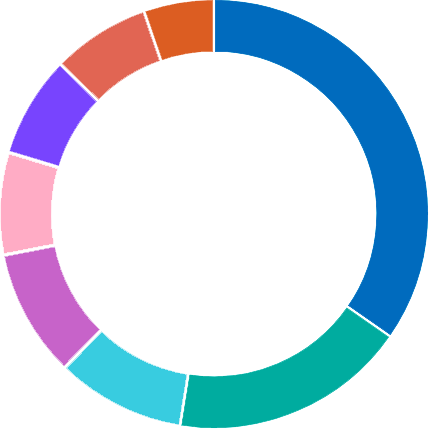
Employment Structure of the Population
The number of employees in organizations in the region in September 2025 amounted to 61.6 thousand people
15.2%
Wholesale and retail trade; repair of motor vehicles and motorcycles
8.2%
Real estate activities
6.6%
Administrative and support service activities
6.5%
Transportation and storage
6.3%
Agriculture, forestry, hunting, fishing and fish farming
4.5%
Hotels and catering activities
Optimal Wage Costs
The average salary in the Leningrad Region from January to November 2025 was 92,088 rubles.